East Germany's Namibian Adventure
November 19, 2004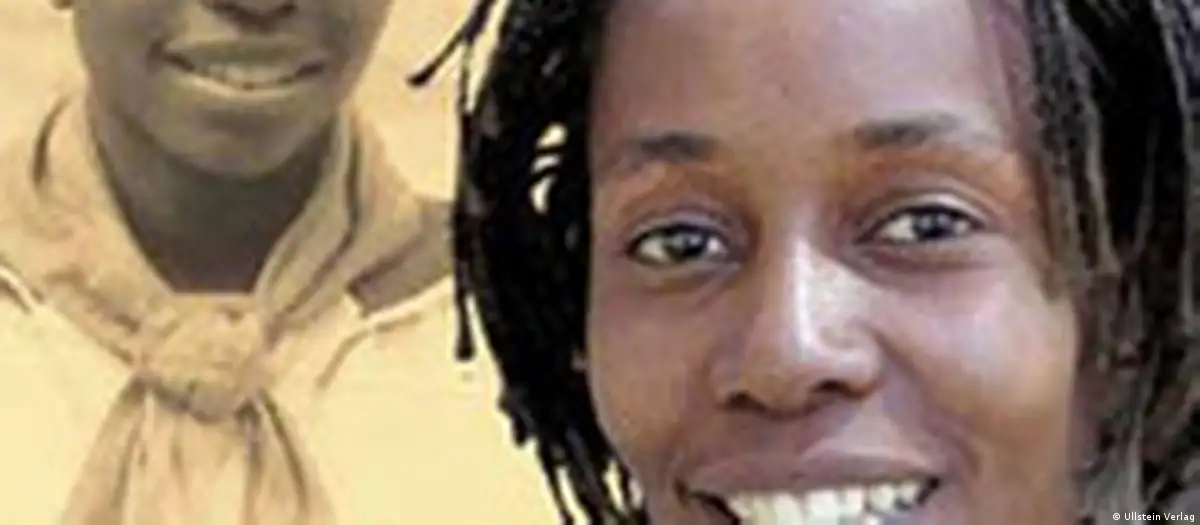
In autumn 1989, as Germany rejoiced at the end of the country's 40-year division, many of the students at the "High-School of Friendship" in Stassfurt, near Magdeburg, felt their hearts sink.
For over 400 children and teenagers dispatched to East Germany from Namibia over the previous decade, the collapse of communism meant one thing: an uncertain future in a country they could barely remember.
Lucia Engombe was one of them.
"Namibia was a strange place to me -- all I knew about it was what my teachers had told me," she told DW-World.
Training the future elite
Germany's relationship with the southwestern African country began in the late 19th century, when Bismarck claimed it as a colony. Almost one hundred years later, communist East Germany was backing the South West Africa People's Organization (SWAPO) in its fight against South African rule and Apartheid.
Erich Honecker's government earmarked what it called "Solidarity Funds" to support the Marxist movement with aid and military supplies, and also hatched a plan intended to be of political and military benefit to both countries. But 1990 marked an abrupt end to the Party-led project to take in and educate Namibian children, with the ultimate aim of creating an elite class to lead the SWAPO liberation movement.
Child No. 95
With "Child No.95 -- My German-African Odyssey," a biography recently published in Germany, Lucia Engombe has written an account of a little-known slice of east Germany history -- both a historical document and a personal memoir.
Plucked at the age of seven from a refugee camp in Nyango, Zambia, she and some 80 other children were sent to Bellin, Mecklenburg, in deepest East Germany.
To a small child who'd suffered such hunger pangs she would swallow buttons she found on the ground, East Germany was the land of plenty -- a place where even the notoriously gritty toothpaste tasted delicious.
Initially isolated from the outside world, the children were taught by a team of party-faithful teachers recruited from both Germany and Namibia. The curriculum included military drills and weapons deployment, while verbal and physical abuse as well as inevitable ideological indoctrination were par for the course.
Unfinished business
Lucia was to stay 11 years. Had the Berlin Wall not fallen, she would have graduated from high school and maybe even stayed in East Germany to pursue further studies.
But at least the demise of the Eastern Bloc coincided with Namibia gaining independence. In 1990, SWAPO became the country's dominant political party, with its head, Sam Nujoma (pictured), elected as the first president.
"I would have liked to stay in Germany to finish my studies," said Lucia Engombe, who was 17 at the time. "But I wanted to go to Namibia, because it meant that finally, I had a home. I had never had one before. I had been a refugee, which had been unbearable. Suddenly I belonged to a free country called Namibia, and I was going to see my family again."
Amid the turbulence of reunification, little thought was paid to the young exiles. The interim East German government led by Lothar de Maiziere was too busy to arrange residence permits and wasted no time sending them home.
But Namibia's new-found independence had created its own confusion, and the country's supposed young elite were left to fend for themselves.
"Educating Namibian children had been seen as an investment for both countries," Lucia's co-author, Peter Hilliges, told DW-WORLD. "When East Germany collapsed, the basic principles no longer applied."
"After 1990, some 42,000 Namibians returned from exile," he said, pointing out that with the South African government's military occupation finally banished, "people were coming back from the countries to which they'd fled, such as Cuba, Zambia and Angola, and that caused all sorts of crises, such as housing problems."
Culture shock
"The problems of what were dubbed the 'DDR (GDR) children' were relatively minor," Hilliges said. "They were simply swallowed up in the hordes of returning refugees. Given that they'd had a good education, they were expected to fare well."
It wasn't that easy.
"These children were stranded between cultures," Hilliges added. "First and foremost, they had basic linguistic problems."
The young people stuck together, speaking their made-up brand of German and Oshiwambo, and clinging to their peculiar identity in the face of broad resentment of what many Namibians saw as arrogance. Many were taken under the wing of members of Namibia's German community, who helped them secure grants from the German government and aid institutions to complete their education at Windhoek's German high schools, previously only attended by whites.
The self-proclaimed "Ossi" Africans -- referring to the nickname for eastern Germans -- have experienced mixed fates. Some are now working as lawyers and businessmen, while Lucia herself is training as a journalist. Some, though, were less fortunate. And few returned to live in Germany.